"You Need" vs. "I Recommend": The One Word That Gets People to Actually Act
Early in my career, I started noticing something about advice. The thing that determined whether people acted on it wasn't always the quality of the recommendation, the evidence behind it, or even whether the person agreed with me. A lot of perfectly good advice gets received with a polite nod, a thoughtful expression, and absolutely no change in behavior.
What I eventually figured out was that the difference often came down to a single word.
When I said "I recommend," people listened. They usually agreed. They might even thank me. But when I said "you need," something shifted. The same idea suddenly carried more weight. It moved from the comfortable land of "I'll think about that" into the much smaller and more useful category of "I should probably do this."
My wife, after many years of marriage, developed a very specific facial expression for the moment I began explaining this at dinner. It was not exactly annoyance. It was more the look of a woman who loved me but also wanted me to stop turning the meal into a continuing education seminar.
Then my dentist used the exact same technique on me.
And I folded like a lawn chair.
Five Years of Politely Nodding
For five years, every dental visit included some version of the same conversation. The hygienist would mention a Waterpik — usually framed as something worth considering. She was always professional about it. No scolding, no laminated brochure slid across the counter like evidence in a courtroom.
She would say things like, "Have you ever considered a Waterpik?" or "It might really help your gum health."
I always responded the same way. I would nod with what I considered a mature and reasonable amount of interest and say something like, "That makes sense. I should probably look into that."
Then I would get in my car, go about my day, and forget the entire conversation before I reached the first traffic light.
Every six months.
For five years.
I didn't disagree with her. I didn't have a philosophical objection to Waterpiks. I simply heard the suggestion as optional, and optional advice has a way of sliding into that crowded mental drawer where good intentions go to live out their final days beside unread books and the vegetables you bought with real optimism on Sunday.
There was also the matter of common sense, or at least what felt like it. Why spend sixty dollars on dental equipment when I couldn't even floss consistently? That felt like buying a treadmill because you got winded walking to the mailbox.
The Appointment That Finally Worked
At my most recent cleaning, I mentioned something that had been bothering me. There's a gap between two molars where food gets stuck after nearly every meal. Not just popcorn, which has a God-given talent for causing dental regret. Nearly everything found that space and settled in like it had discovered cheap rent.
My dentist took a look and said, very plainly: "You absolutely need a Waterpik."
No hedging. No soft landing. No "you might consider." He presented it as the right answer to a specific problem I had just described.
A few minutes later, I walked out of the office, pulled out my phone before I even started the engine, and ordered one on Amazon. No research spiral, no internal debate, no "I'll get around to it." I found one, paid $59.99, chose next-day shipping, and went on with my life as a newly compliant dental patient.
Five years of polite suggestions had moved me exactly nowhere. One clear sentence turned me into a man buying oral irrigation equipment in a parking lot with the urgency of someone stocking up before a winter storm.
The Realization at the Bathroom Sink
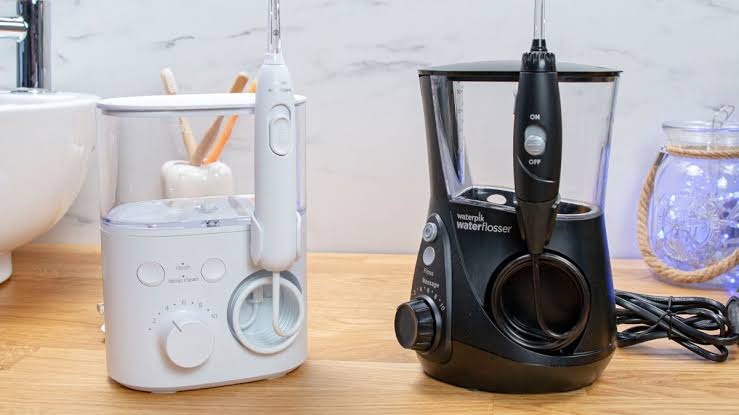
The Waterpik arrived the next day. It has seven pressure settings, which feels excessive. Setting three seems reasonable. Setting seven feels like it should require safety glasses and a signed waiver.
A few days in, standing at my bathroom sink while this countertop machine pressure-washed my mouth into better citizenship, it hit me. My dentist had used my own technique on me.
The same word I had been teaching for years. The same distinction I had explained to clients, students, and colleagues — and, to my wife's documented frustration, a few dinner guests who were just trying to enjoy appetizers.
I knew the technique. I believed in it. I had watched it work repeatedly.
And it still worked on me.
I started laughing, which is an odd thing to do at 6:30 in the morning while holding a Waterpik. From the bedroom, my wife called out, "Are you okay?"
Physically, yes. But I was having a small identity crisis at the bathroom sink.
Why the First Five Years Failed
For five years, the message had sounded optional. "You might want to consider a Waterpik" landed in my brain as something to revisit later. "I recommend it" sounded professional and polite, but it didn't create any sense that action was actually required. By the time I reached my car, the advice had already started to fade.
When my dentist said "you absolutely need a Waterpik," the ambiguity disappeared. The recommendation moved from optional to essential. It was no longer a general suggestion about gum health — it was a direct answer to a problem I was actively experiencing and had just described out loud.
That's the part we consistently underestimate. People aren't always ignoring advice because they're lazy or uninterested. Sometimes they're responding exactly to the level of importance we communicated. If the message sounds optional, we shouldn't be surprised when people treat it that way.
The Word Alone Isn't Enough
The word mattered, but it wasn't the only reason it worked.
This wasn't generic advice handed to every patient. It was tied directly to something I had just described. My dentist connected the gap between my teeth, the limitations of regular floss in that specific area, and the practical value of water pressure. He said it like he meant it — no hesitation, no qualifiers softening the point until it barely had a shape. His certainty felt grounded, not scripted.
That combination is what made it land: clear language, specific context, and genuine conviction.
Without context, "you need" can feel pushy. Without conviction, it can feel hollow. But when all three are present, the message becomes much easier to act on.
Where This Costs Us Most
Once you notice this pattern, you see it everywhere.
In leadership, priorities get framed like preferences. Someone says "it would be great if we could get this done soon" when what they mean is "this needs to be finished by Friday." The softer version may feel kinder in the moment, but it also gives people room to treat the deadline as flexible — or optional.
We do the same thing with ourselves. "I should probably get started on that" is one of the great escape phrases of adult life. It sounds responsible while quietly allowing delay. "I need to start today" is harder to dodge because it removes the comfortable fog around the decision.
None of this means every conversation needs to feel heavy. Most things don't rise to that level, and using "need" carelessly will exhaust your credibility fast. If everything is urgent, nothing is. Once people learn that your "need" really means "I'd prefer," the word loses its power entirely.
That's what makes it work when you use it honestly — and what makes it fail when you don't.
My Hygienist Is Going to Be Unbearable
I use the Waterpik every morning now. I remain committed to setting three and have no plans to explore settings four through seven without adult supervision. The thing works.
My hygienist is going to be enormously pleased at my next appointment, and she has more than earned that moment.
More than anything, the whole thing has become a useful daily reminder of something I thought I already understood: the way we say something often determines whether anything happens next.
For five years, I was advised to buy a Waterpik.
Then I was told I needed one, and I bought it before I left the parking lot.
That was the difference.

Thanks for reading!
If this made you think about how a few words can change what people actually do, you’ll probably like Mostly Housebroken.
Thank you for subscribing!
Have a great day!