Why Paper Still Has a Place in a Digital World
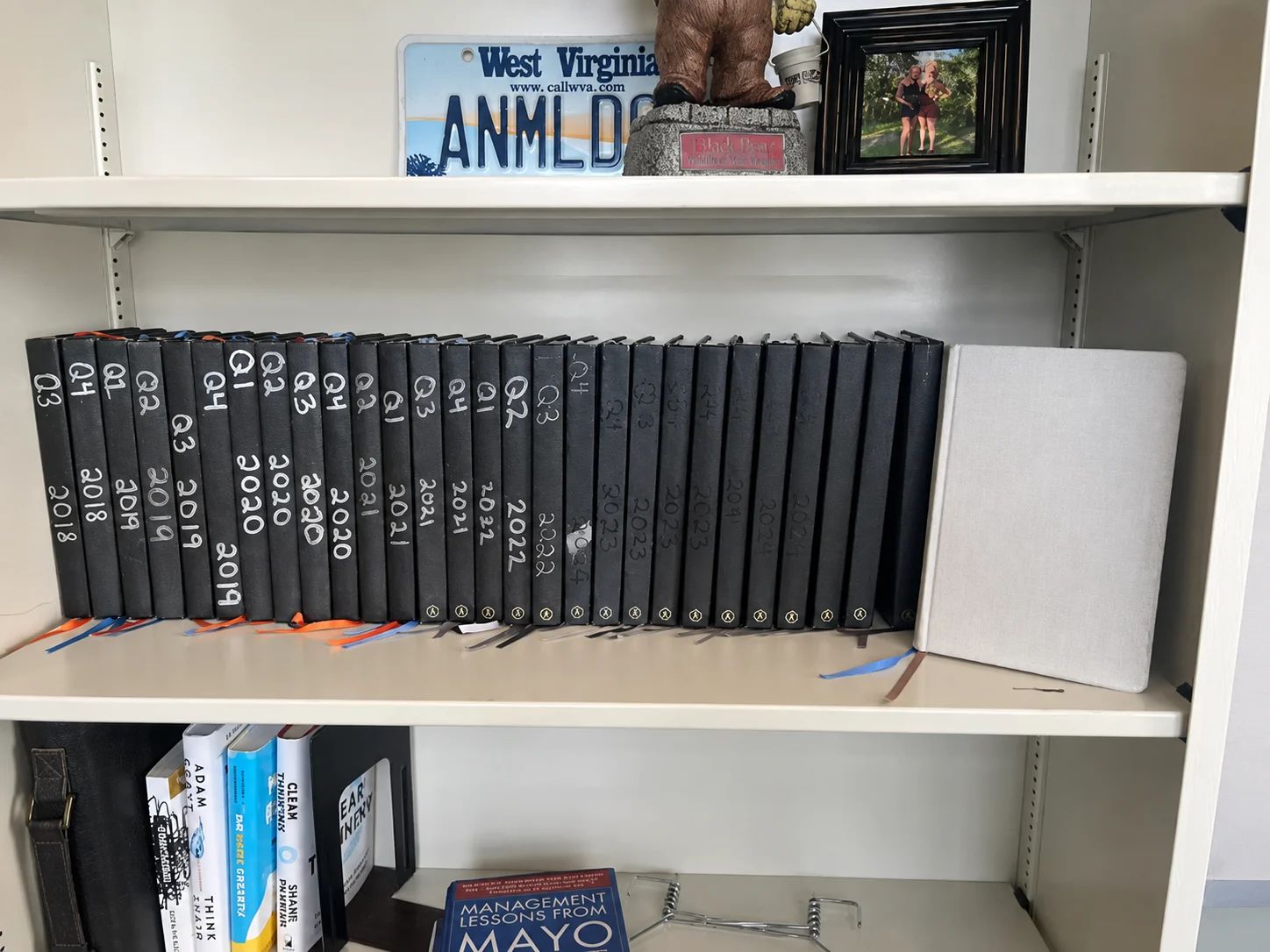
There is a drawer in my office that tells a very honest story about me.
Inside it sits a sleek, beautiful e-ink tablet, the kind that promises the best of both worlds. Write like paper, sync like digital. AI-powered handwriting recognition. Cloud backup. Infinite notebooks. A screen engineered to feel so much like paper that, according to the marketing, actual paper should probably start updating its résumé.
The marketing was excellent. Finally, paper without the limitations.
I am, apparently, highly susceptible to promises of having it all.
I spent an entire Saturday setting it up. I organized notebooks, synced calendars, customized templates, tested handwriting recognition, and learned gestures I would forget by Tuesday. It was beautiful in the way well-designed technology is always beautiful: clean, considered, and full of possibility. By the end of the day, I felt like someone who had his life together.
Day one, I felt ahead of the curve. Day seven, I had opened it exactly twice, both times to fiddle with settings. Day fourteen, it went in the drawer.
It has not come out since.
Here is what killed it, and it was not anything dramatic: friction. Every time I wanted to use it, I had to find it, turn it on, wait for it to wake up, navigate to the correct notebook, and locate the right page. Each individual step took maybe five seconds. Together, maybe thirty. That is not a long time by any reasonable measure.
But my paper planner was already open on my desk.
No power button. No loading screen. No decisions about which notebook held my supposedly important thoughts. Just open it, see what matters, and get to work. Thirty seconds of friction, it turns out, can be the difference between a tool you use every day and a very expensive item in a drawer.
We’ve Confused Capability With Usefulness
The technology industry has become very good at finding tiny points of friction and turning them into entire product categories. Some of those products are genuinely helpful. I am not anti-technology, unless being mildly irritated by password resets counts as a formal ideology.
Digital tools are extraordinary for many things. My calendar needs to live online because other people are involved. My email needs to be searchable because some important decision from three months ago is always hiding in a thread called “quick question.” Shared documents are better than passing around version seventeen of a Word file like it is a fragile family heirloom.
Digital systems are excellent at storage, communication, retrieval, and coordination. They are less excellent at attention.
That distinction matters. A digital tool can hold everything, but that does not mean it helps you decide what matters. In fact, its greatest strength can become its greatest weakness. The digital world is functionally infinite: infinite pages, infinite folders, infinite tabs, infinite reminders, infinite ways to reorganize the work instead of doing the work.
The modern productivity ecosystem has made it possible to spend an entire afternoon improving your system while making zero progress on your actual priorities. You can rename folders, build workflows, adjust settings, create dashboards, and feel oddly productive while the work that matters sits quietly in the corner aging like bananas.
Later becomes the great junk drawer of modern work. Later is where good ideas go to nap indefinitely.
Paper does not offer later in quite the same way. Paper asks what you are doing with this now.
The Right Kind of Friction
Most people assume the goal of a productivity system is to eliminate friction. I am not sure that is right. The goal is to put friction in the right places.
The friction of finding, booting, navigating, and loading a digital tool is bad friction. It taxes you before you have done anything useful. But the friction of writing something down by hand, slowly and deliberately, with a pen that requires actual movement across an actual page? That friction is doing something.
When I write a goal by hand, I cannot type at the speed of panic. I cannot copy, paste, duplicate, and rearrange my ambitions into something that looks better than it is. The sentence has to pass through me at least once before it becomes visible. That physical act creates a different relationship with the work, a small but real moment of commitment that typed text does not quite replicate.
There is also the question of what stays visible once you have written it. A digital task can disappear behind a browser tab, beneath an email window, inside an app you forgot to open, or under a pile of notifications demanding immediate tribute. A paper planner sitting open on your desk keeps quietly telling the truth. It does not shout. It does not ping. It does not flash. It simply remains.
Attention is not just mental. It is environmental. What we place in front of ourselves shapes what we remember to care about. If your priorities are hidden, they become easier to ignore. If they are visible, they become harder to abandon.
Digital Tools Capture. Analog Tools Confront.
Here is the distinction I have found most useful: digital systems are exceptional at capture. They help us collect information quickly and store it neatly. That is valuable. We need places to put ideas, meeting notes, deadlines, documents, and decisions.
But capture can quietly become avoidance. There is a subtle comfort in saving something for later, in knowing it is safely filed somewhere searchable. The saved thing feels handled. It usually is not.
Analog tools are less generous about this. They ask a more direct question: what are you actually doing with this?
A paper page has edges. A day can only hold so many priorities before the handwriting starts shrinking into a confession. You cannot keep adding forever. At some point, the page looks back at you and says, really? All of this today?
That is not a flaw. That is the point.
When I write down three things that matter most today, I am not making a list. I am making a decision. I am admitting that the day has limits, that my attention has limits, and that pretending otherwise does not make me ambitious. It makes me sloppy.
Digital task lists often let us avoid that confrontation. They allow endless accumulation without forcing prioritization. You can carry ninety-seven tasks sorted by project, tag, due date, and emotional damage, and the list will look organized even as the person responsible for it quietly drowns.
Paper is less accommodating. It makes overcommitment visible.
And visibility changes behavior.
Most of Us Have a Version of That Drawer
The drawer in my office is not really about the tablet. Most of us have some version of it.
The app we spent a weekend configuring and quietly stopped opening. The software our organization rolled out that everyone uses just enough to avoid a conversation about it. The system we optimized carefully and then abandoned because the optimizing turned out to be more interesting than the using.
The drawer is not a failure of discipline. It is information.
When a tool ends up there, it is usually because the gap between its promise and its daily reality was too wide to sustain. The promise was frictionless productivity. The reality was thirty seconds of loading screens and a faint sense that you should be organizing your notebooks better. Promise and reality diverged, and the drawer won.
The honest question is not why we put things in the drawer. It is why we keep pulling new things out of boxes convinced this one will finally be different.
Part of it is genuine optimism, which is hard to criticize too harshly. Part of it is that the new thing genuinely might be better. And part of it, the part worth sitting with, is that we are often more comfortable upgrading our tools than doing the actual work the tools are supposed to support.
A new system feels like progress. It produces some of the satisfaction of productivity without requiring any of the output.
The Tool Was Never the Whole Answer
There is no perfect productivity system. There are only systems that match the kind of work you need them to do.
Digital is better for collaboration, search, complex scheduling, shared accountability, and anything requiring multiple people to see the same information at the same time. These are real advantages, and pretending otherwise would be professionally reckless. Someone would eventually find me wandering a hallway with a legal pad muttering about the cloud.
Analog is better for focus, reflection, and forcing decisions before the day gets loud. Analog is better when the goal is not to capture everything, but to remember what matters.
The mistake is expecting one tool to do both jobs. That is how people end up disappointed, buying a digital tool hoping it will create discipline, buying a paper planner hoping it will manage complexity, switching systems every few months because the new one briefly feels like progress until the shine wears off and the old habits return.
A planner cannot make you disciplined. An app cannot make you focused. A dashboard cannot make you honest. These tools can only shape the environment in which discipline, focus, and honesty become more likely.
That is the real question worth asking about any system: does it make your priorities more visible or easier to bury? Does it reduce decisions or multiply them? Does it help you act, or does it invite you to endlessly improve the machinery around acting?
Those questions matter more than whether the tool is paper or digital.
The Future Will Keep Offering Smarter Systems
Some of them will be genuinely useful. The technology keeps getting better, and I will probably keep trying new things because apparently I remain vulnerable to tasteful marketing and the quiet promise of becoming a better-organized version of myself by Thursday.
But before I enter the digital flood each morning, I want one analog moment. I want to sit down, look at what I have committed to, and decide what matters before the inbox starts voting. I want to write three things by hand before other people’s urgency becomes my operating system. I want the day to begin with intention rather than reaction.
That small ritual is not dramatic. It is not futuristic. It does not produce a beautiful analytics report. But it works because it is simple enough to repeat and visible enough to matter.
The best system is not the most impressive one. It is the one you actually use every day, without thinking about it, maintaining it, or troubleshooting it at seven in the morning when you just want to plan your day.
The drawer fills up. The paper planner stays open.
That is not nostalgia. That is data.
The smartest tool in the room is not always the one with the most features. Sometimes it is the one quiet enough to let you think.

Thanks for reading!
Subscribe for free to receive new posts and support my work.
Thank you for subscribing!
Have a great day!