Veterinary Students Need to Learn More About Veterinary Technicians
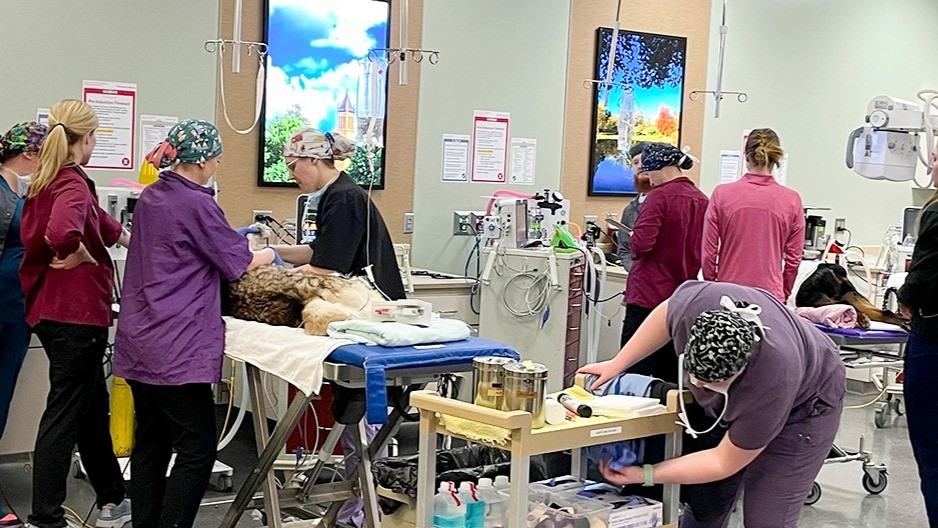
We graduate veterinarians and almost immediately expect them to lead clinical teams. We expect them to delegate appropriately, understand supervision requirements, recognize the capabilities of the people around them, and build workflows that allow everyone to contribute effectively. At the same time, we expect new graduates to manage cases, communicate with clients, complete records, understand the economics of practice, and make decisions that now carry their own name and license.
Those are substantial expectations for anyone beginning a career. They become even more difficult when veterinary students have received little structured education about some of the most important people available to help them succeed.
The Lesson We May Be Leaving Out
In 2023, I was chosen to represent Purdue University in that year’s cohort of the AAVMC Leadership Academy, a program focused on developing future leaders in academic veterinary medicine. As part of the Academy, participants worked in groups on a capstone project addressing a meaningful challenge facing the profession and something colleges of veterinary medicine could influence.
Our group chose veterinary technicians. We proposed a certificate program that veterinary students would complete before graduation, ideally before entering their fourth year of clinical training. The goal was not to teach veterinary students how to become technicians. It was to make sure they understood technician education, scope of practice, professional recognition, utilization, compensation, retention, and the role technicians would play throughout their careers.
That focus came naturally to me. Before becoming a veterinary hospital executive, I owned a veterinary practice and later directed AVMA-accredited veterinary nursing programs. I saw what veterinary technicians could contribute when they were trusted and allowed to work at the level of their education and experience. I also watched talented technicians become frustrated when their knowledge was overlooked, their responsibilities remained narrow, and the professional distinction behind their role was treated as though it carried little weight.
Those experiences led me to a conclusion that has not changed: if colleges of veterinary medicine want to prepare students for sustainable careers, they need to teach them about the people those careers will depend on.
Veterinary schools are paying more attention to sustainability than they once did. Students receive more education about wellbeing, communication, finances, workplace culture, leadership, and the transition from school into practice. That work is valuable. New veterinarians enter a profession that is clinically demanding, emotionally taxing, and complicated to navigate during the first few years.
But there is another part of the sustainability conversation that veterinary education may not have fully embraced: preparing students to understand and work effectively with veterinary technicians.
Too Much Depends on What Students Happened to See
Some students enter veterinary school after spending years in a veterinary hospital. They may already understand the value of an experienced technician and have seen what a strong veterinarian-technician partnership looks like. Others arrive with very little exposure to veterinary technicians.
As a result, students can reach their clinical year with very different ideas about who technicians are, how they are educated, and what they are capable of doing. Their understanding may depend almost entirely on the hospital where they happened to work, the people they happened to meet, or the utilization model they happened to observe.
That is too important to leave to chance.
The gap may be especially noticeable at colleges of veterinary medicine that do not have a veterinary technology or veterinary nursing program embedded within the college. When veterinary students and veterinary technician students are educated in different places, they may never share a classroom, discuss a case together, or learn anything about one another’s education before entering the profession.
The technician program may be housed in another college, located on another campus, or absent from the university altogether. Without a deliberate effort to bridge that distance, a veterinary student can complete nearly an entire professional education without understanding the training of the people who will work beside them every day.
Then we hand that graduate a diploma and expect them to lead the team.
This is not a criticism of veterinary students. We should not expect students to understand material they have never been deliberately taught. It is also not an indictment of veterinary schools, which are already trying to fit an enormous and expanding body of knowledge into four demanding years. It is simply an educational gap worth addressing.
What We Proposed
Our certificate was designed to be practical. We wanted veterinary students to understand not only how veterinary technicians are educated, but also how technician utilization affects patient care, productivity, retention, and the financial health of a practice.
One session focused on the education provided through AVMA-accredited veterinary technology and veterinary nursing programs. Students would learn what those programs require and what technicians must know and be able to do before entering the profession. The purpose was to replace a vague idea of “support staff” with a clearer understanding of the education and clinical preparation behind the role.
Another session focused on effective technician utilization. Students would work through case-based scenarios involving scope of practice, including situations where tasks were delegated improperly and situations where technicians were not being used to the full extent permitted by law.
Poor utilization can occur in both directions. A hospital can ask someone to perform a task they are not legally permitted to do, or it can restrict a trained technician so severely that the veterinarian ends up performing work that could have been delegated safely and appropriately.
The certificate also addressed recruitment and retention, including compensation and benefits. We wanted veterinary students to understand that technicians do not remain in the profession simply because they care about animals. They also need viable careers, reasonable compensation, opportunities for growth, and the chance to use the education they worked to earn.
We included the economics of team design as well. Students would examine how practices function with and without effective technician utilization and how those choices affect productivity. That was not about reducing people to numbers. It was about helping future veterinarians understand that underutilization carries consequences for everyone.
When technicians are used effectively, veterinarians have more time to diagnose, interpret findings, develop treatment plans, perform procedures, and communicate with clients about complex decisions. When technicians are underutilized, veterinarians often absorb work that does not require a veterinary degree.
The veterinarian’s day becomes longer. Records move into the evening. Appointment capacity remains limited. At the same time, the technician may spend the day using only a small portion of what they were educated and trained to do.
The veterinarian becomes overwhelmed. The technician becomes frustrated. The hospital loses efficiency, capacity, and eventually people.
Another part of the proposal focused on professional recognition and the rules that define appropriate utilization. Students would learn how to locate and interpret the veterinary practice act in the state where they intended to work, including which responsibilities could be delegated, what supervision was required, and which decisions had to remain with the veterinarian.
Too many graduates enter practice knowing only what they observed somewhere else. What they saw may have represented excellent utilization, unnecessary restriction, or a misunderstanding of the law. Familiarity is not the same as understanding.
The roundtable discussion would come near the end of the program, after students had already learned about technician education, utilization, compensation, retention, professional recognition, and scope of practice. By that point, they would have enough background to ask better questions and better understand what technicians were telling them.
Students could hear directly from technicians working in anesthesia, surgery, emergency and critical care, internal medicine, dentistry, diagnostic imaging, large animal medicine, general practice, and other areas. They could ask what good utilization looks like, what helps technicians stay in the profession, what causes them to leave, and what they wish every new veterinarian understood before the first day of practice.
Placed at the end, the roundtable would help students connect the earlier material to the real experiences of the people they would soon work beside. It would also reinforce an important point: experienced technicians can become some of a new veterinarian’s most valuable teachers, helping them understand workflow, build confidence, recognize developing problems, and deliver care more effectively.
Six Hours Is a Reasonable Start
Our certificate program never reached completion. We met with several groups and explored what implementation would require, but adding a new certificate to an already crowded veterinary curriculum was a significant undertaking.
Having led academic programs, I understand that reality. Adding material is never as simple as deciding it is valuable. Every addition requires someone to determine where it belongs, who will teach it, how it will be delivered, and what may need to be reduced to create room.
But the difficulty of creating a full certificate does not mean the educational gap should remain untouched.
There is a smaller and more practical version of the same idea: one intentional session about veterinary technicians during each semester of the first three years of veterinary school. That is six hours before students enter their fourth-year clinical rotations.
Early sessions could cover technician education, accreditation, credentialing, and required clinical skills. Later sessions could address scope of practice, supervision, utilization, compensation, professional recognition, and retention. At least one session should bring technicians from different specialties together for an honest conversation with students.
This does not require a new course or a curriculum overhaul. The sessions could occur through professional development programming, lunchtime presentations, grand rounds, leadership coursework, or another structure that already exists.
Veterinary students deserve this education because we ask them to lead teams almost immediately after graduation. We should not criticize new veterinarians for weak delegation or poor technician utilization if their formal education never addressed either subject.
Veterinary technicians deserve it because they should not have to explain the value of their education, experience, and role to every new veterinarian who enters the hospital.
I have spent my career as a veterinarian, practice owner, veterinary nursing educator, and now the leader of a veterinary teaching hospital. From each of those positions, I have seen the same thing: veterinarians are better when the technicians around them are trusted, respected, and able to use what they know.
Veterinary schools already devote thousands of hours to teaching students how to become veterinarians. Surely six of those hours can be devoted to teaching them about the veterinary technicians who will help them become better ones.
Enjoyed the essay?
Get Mostly Housebroken, my free Sunday newsletter about life, people, and the strange things we do. You'll also receive a free copy of my eBook, Soup Beans on the Good China.
You're in!
Thanks for subscribing. Your free eBook, Soup Beans on the Good China, is headed to your inbox. Look for Mostly Housebroken every Sunday.
Be sure to check your spam folder if you don't see the email.