The Farm That Made Me
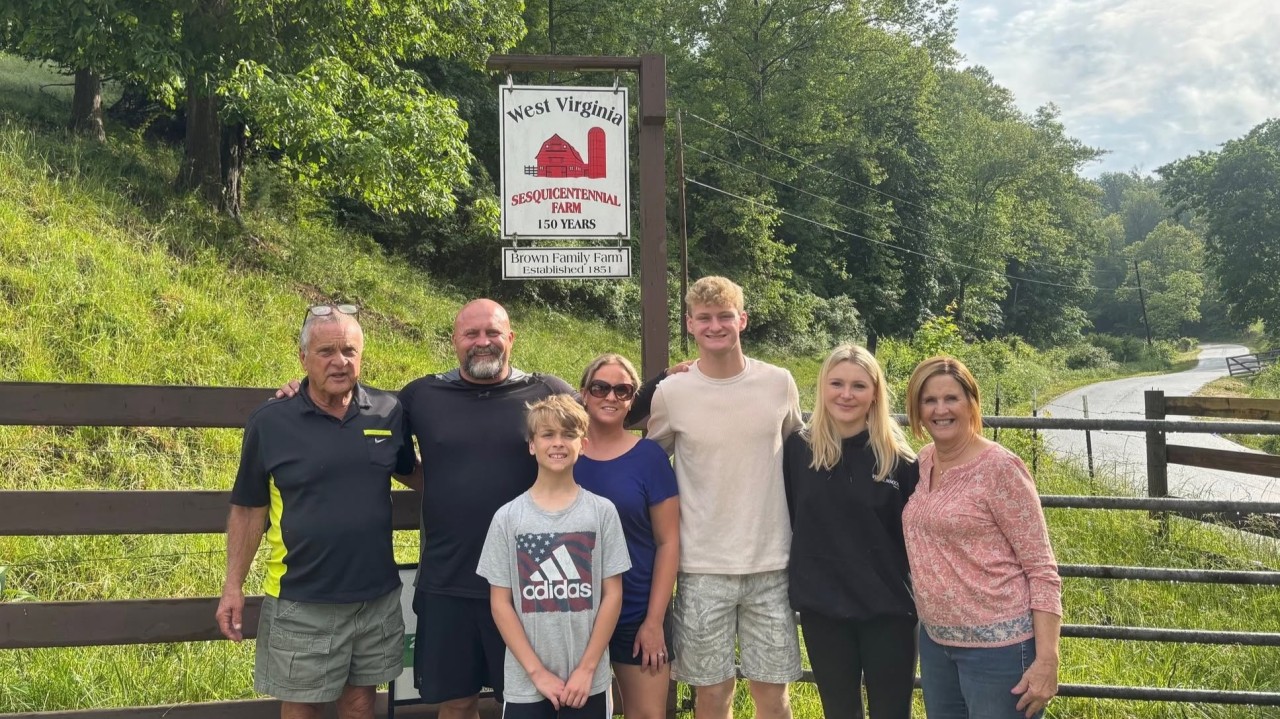
There is a sign at the entrance of a West Virginia farm that reads: Brown Family Farm. Established 1851. Somewhere behind that sign is a herd of cattle actively planning their escape, a fence post that has been rotting since the Obama administration, and enough invasive shrubbery to file for its own zip code. I grew up on that land, and I can tell you from experience that the sign undersells it.
One hundred and seventy-five years. The same hills. The same ridgelines. The same stubborn ground. And the same general understanding that if something can break, rot, escape, clog, lean, rust, bloat, limp, or grow thorns, it will probably do so shortly after supper.
Three Rules That Run Everything
Most people's idea of farming comes from somewhere between a pastoral oil painting and a fall festival pumpkin patch. Let me offer a corrective, for those of you who have never done it and should thank your lucky stars daily.
Running a beef cattle operation is a war fought on three fronts simultaneously. First: keep the cattle inside the fence. This sounds like a low bar, and I promise you it is not. A cow that wants out will find the one post that has been quietly rotting for seventeen years and walk through it at ten o'clock on a Tuesday night. No cow has ever respected bedtime, weather, church clothes, or the fact that somebody has to work in the morning. The cow does not care about your morning. The cow has its own agenda.
Second: keep the cattle fed and healthy, which is a full-time job tucked neatly inside another full-time job. There is always hay to make, hay to move, hay to worry about, water to check, minerals to put out, and one animal standing by itself in a way that makes every veterinarian immediately suspicious.
Third, and I cannot stress this enough, wage constant, unrelenting, generational war against whatever invasive plant has currently decided it owns the place. When I was a kid, the enemy was multiflora rosebush — a thorned shrub the USDA spent decades promoting as a "living fence" before it proceeded to swallow half of Appalachia. It had ambition, resentment, and what appeared to be a long-term land acquisition strategy. My childhood involved a considerable amount of trying to convince multiflora rose that the Brown family still had legal standing on its own property.
Now the new problem overtaking West Virginia farms is autumn olive. Of course it is. Because farms do not eliminate problems — they promote them to new departments. Multiflora rose was the old regime. Autumn olive is the younger, faster, more aggressive replacement with a better public relations strategy and a name that sounds like a candle scent. In reality, it is attempting to annex Appalachia one pasture at a time, and the birds are its accomplices. The villains change costumes. The plot stays the same.
Now layer all of this on top of the fact that both of my parents were full-time middle school teachers. They would finish a full day managing other people's children — which is its own form of endurance sport and deserves its own article — then come home to cattle, hay, broken equipment, and whatever new disaster had been quietly assembling itself while they were at school. Weekends were mostly something other people talked about.
Still Standing
My brother lives on that farm now, along with his family and my parents. All of them. Together. Working the same operation. Before anyone pictures some idealized farmhouse scene, understand that this is a real working farm where the cattle have no respect for anyone's schedule and the vegetation is actively plotting real estate moves. What they have created there is something most people will never experience and very few could pull off: multiple generations under the same sky, working the same land, in a world where most families are scattered across zip codes and connected mostly by group texts. My dad is still going strong. My mom too. My brother and his family are doing the heavy lifting and then some. Nobody waits to be asked. Work is not a project there. It is the weather system everyone lives inside. That is not normal anymore. That is rare. That is something.
Remote Consultation
I live twelve hours away now, planted firmly in the heart of the Midwest, which means my contributions to the operation look a little different than they used to. My dad sends pictures. My brother sends questions. And I — a credentialed veterinarian with decades of large animal experience — diagnose West Virginia cattle via iPhone photography from my couch in Iowa. "What's wrong with this one?" the text says, attached to a blurry photo taken at dusk from fifteen feet away. I squint. I enlarge the picture. I tilt my phone, as if that will somehow improve the diagnostic quality. I render my professional opinion. I send a YouTube link. We get through it.
Do I own a farm? No. Would I? Also no. But I have nothing but respect for the people who do. My brother has absorbed enough of this long-distance coaching that he is nearly halfway to his veterinary license. He has Google, determination, and a better camera than he used to. The gap is closing, and I am proud of him. Thank God for the digital world — without it, the Brown Family Farm's remote veterinary consultant, which is apparently me, would be considerably less useful than he already is. Farming is not a romantic lifestyle choice. It is a calling that will humble you daily, pay you inconsistently, and send a cow through your fence at ten o'clock at night just to make sure you still have something left.
The Foundation
That farm made me. The work ethic, the stubbornness, the practical optimism, the understanding that nothing worth keeping is ever convenient — all of it came from watching my parents run two full-time lives without blinking, on land that was constantly trying to grow back into wilderness while a herd of cattle was constantly trying to leave. There is something deeply clarifying about growing up around land that does not care about your excuses. The fence is either fixed or it is not. The hay is either in before the rain or it is not. The brush is either pushed back or it takes another few feet. You learn early that effort is not a mood, a slogan, or something you wait to feel inspired to offer. It is simply what the day requires. I did not learn that from a book. I learned it from people who came home from school, changed their clothes, and went back outside. Farm life has a way of stripping the poetry out of responsibility while somehow making the whole thing feel sacred anyway.
My parents gave their lives to that land. My brother and his family are giving theirs now too. And somehow, they will all tell you it is worth it. I believe them. I have believed them my whole life.
The Brown Family Farm was recognized as a West Virginia Sesquicentennial Farm. The sign says 150 years. Time, being inconsiderate, has kept going. The farm is now 175 years old.
Three generations of people tougher than me have stood on that same piece of ground, living a way of life the modern world mostly forgot how to do.
I turned out fine going a different direction. But I know exactly where the foundation came from.
Proud of this place. Proud of these people. Glad someone else is fighting the autumn olive tonight.

Thanks for reading!
Subscribe for free to receive new posts and support my work.
Thank you for subscribing!
Have a great day!