Road Rage and the Pile Underneath

There's a particular kind of moment that shows up on any given day. The guy ahead of you in the checkout line waits until every item is scanned before he even starts looking for his wallet. Your teenager rolls her eyes at something you said, something you thought was reasonable. A text lands wrong. The neighbor's dog starts up again at 6 a.m., right on schedule. On a normal day, you'd let any of this roll off you without a second thought.
But some days aren't normal, and on those days something small gets in and doesn't leave. You feel it: a quick tightening, a shift from neutral to irritated in about half a second. And suddenly you're not annoyed about the thing that just happened. You're gearing up to restore order to the universe.
I know that feeling well. I've had it in grocery lines, in conversations that went sideways for no good reason, in text exchanges that shouldn't have mattered to me as much as they did. Not long ago, I had it sitting behind a car that wouldn't move at a green light. The driver's head was tilted down, presumably at a phone, presumably at something that felt urgent in that instant and wouldn't matter an hour later. I waited. I waited a little more. And I felt the surge — not full anger, just that small internal click from calm to irritated, the kind that arrives before you've even decided to be upset.
Something small trips a wire you didn't know was armed. That's the part worth paying attention to, because the wire was armed long before the green light.
The Fight That Isn't About the Fight
Netflix's Beef understands this better than almost anything else I've watched in years. On the surface, it's a show about two strangers who have an ugly run-in in a strip mall parking lot. Danny Cho is a contractor watching his business and his family obligations slide toward collapse. Amy Lau is a successful entrepreneur who's built the kind of life other people admire from a safe distance. They cross paths for maybe ninety seconds. Nobody gets hurt. In a reasonable world, both of them drive home, vent to whoever will listen, and forget about it by morning.
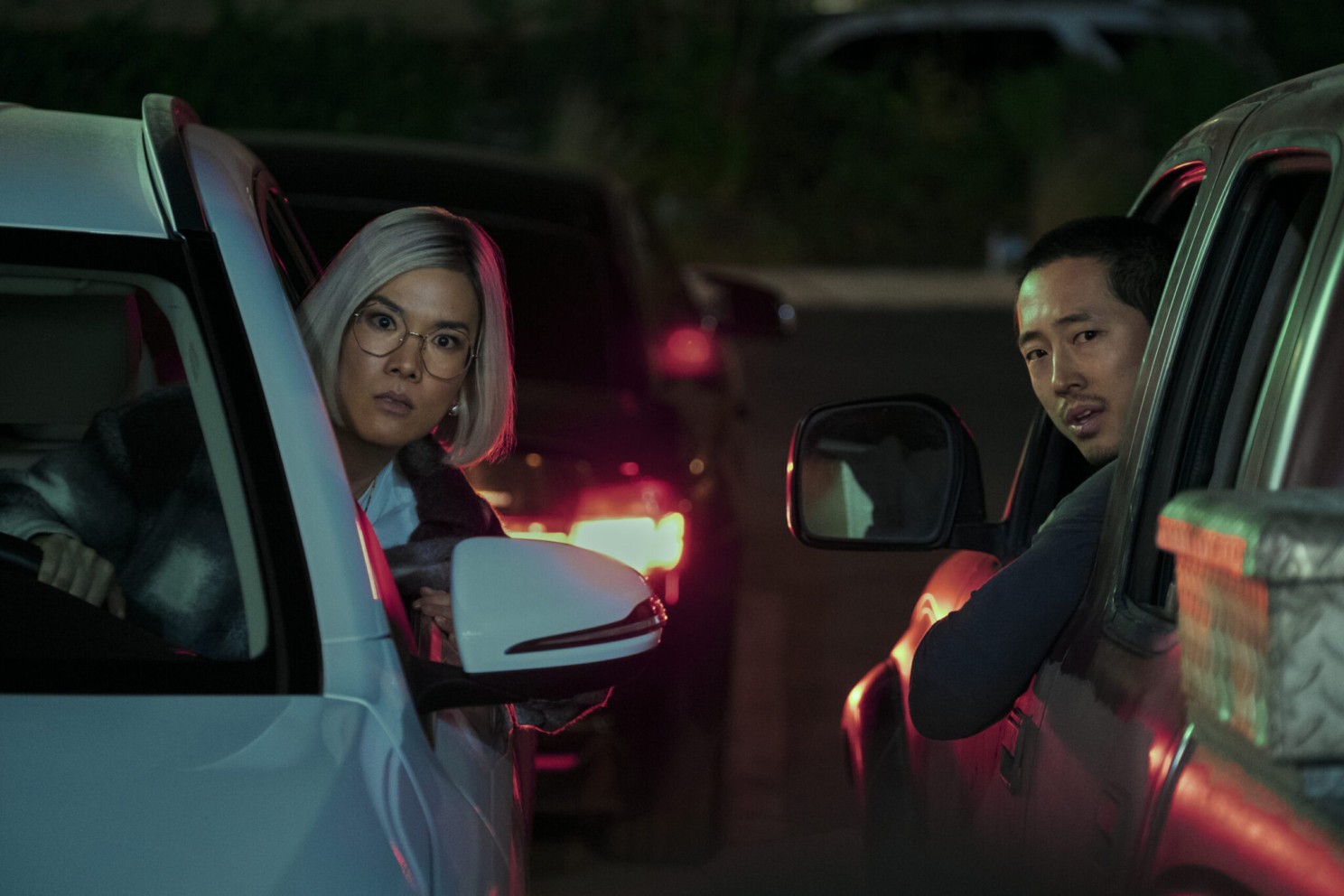
Beef has no interest in the reasonable world. A parking lot flare-up turns into a feud. The feud turns into a mission. The mission becomes a slow-motion demolition of careers, marriages, and eventually the version of themselves each one thought they were holding together. You watch two people risk nearly everything over a moment that, on paper, shouldn't have registered at all.
Except it did, because neither of them showed up to that parking lot empty. Danny is carrying a failing business, family debt, shame he hasn't said out loud to anyone. Amy is carrying a marriage that looks right in photos and feels hollow up close, plus the particular exhaustion of being competent and admired and somehow still invisible. Both of them were already full before they ever put the car in park. The parking lot wasn't the fire. It was the match, thrown into a hayloft that had been drying out for years.
Most blowups work the same way. The moment that sets you off is rarely the real cause of the size of your reaction. The slow checkout line isn't making you furious because someone forgot their wallet. It's the argument from yesterday, the thing your kid said at breakfast, the bill sitting unopened on the counter, the creeping sense that you're working harder than you ever have and still somehow falling behind. The line is the match. The pile was already there, stacked and waiting.
The Private Courtroom
I've watched this play out in other people, and I've watched it play out in myself. There was a stretch not that long ago when I let something smaller than it should have been grow larger than it needed to be. The situation felt unfair, and I'd built a case that someone involved wasn't operating in good faith. I may have been right about that. I probably wasn't as right as I felt.
What I know for certain is that I carried it too long. I replayed the whole thing in my head on a loop, revising my internal argument, sharpening points I never actually said out loud to anyone who could respond to them. I got very good at being righteous in the privacy of my own mind, where I was always reasonable and always the one who saw things clearly. There's no opposing counsel in that courtroom. No cross-examination. Just you, running the same case again and again until it feels airtight.
It felt justified, and some of it probably was. But holding onto it that tightly cost me things the original offense never touched — focus, patience, a version of myself I generally like being. Anger always reads well in the first draft. It's the second and third drafts, the ones you write at 11 p.m. replaying a conversation from three days ago, that start costing you something real.
Seneca wrote about this to a friend nearly two thousand years ago, and his argument still holds up: chasing vengeance burns far more time and exposes you to more damage than the original insult ever did. He wasn't telling his friend to be a doormat. He was asking him to actually tally the bill. One ungoverned moment — a friendship, a job, a version of yourself you liked — can cost more than most people ever bother to calculate, mostly because they never sit down and do the math.
What Winning Actually Costs
This is why Beef holds up as more than dark comedy. The escalation is absurd, but the emotional logic underneath it isn't. You watch Danny and Amy make choices that any outside observer can see will only make things worse, and you understand exactly why they make them anyway. Letting go feels like losing, especially when the other person genuinely did something wrong, especially when your case is airtight. Some part of us believes peace without justice is just weakness in a nicer outfit.
But the real question isn't whether you'd win the argument. It's what winning would actually cost you to collect on. Ralph Waldo Emerson once made the point that every minute spent angry is a minute of peace you don't get back. It sounds almost too tidy, the kind of line that ends up printed on a mug next to a watercolor sunset, but the math holds anyway. What you trade for holding on isn't abstract. It's the meeting you can't focus in because you're still replaying an argument from the night before. It's the good moment with your family you half-miss because you're somewhere else in your head. And often, it's your own sense of who you are on your better days.
I don't want to pretend this is easy. Letting go of something legitimate can feel almost insulting, like putting down a stone somebody else genuinely threw at you. It doesn't always feel like strength. Sometimes it just feels like giving up.
But there's a version of strength that looks like surrender from the outside because it isn't interested in performing dominance. It doesn't need the last word or the perfectly worded reply. It doesn't require the other person to fully admit every way they were wrong before you're allowed to be done carrying it.
The people I admire most aren't the ones who never get angry. They get angry plenty. They feel the heat rise and recognize the insult for what it is. What they don't do is let the anger take the wheel. They let it say its piece, then they decide whether it actually has anything useful to add. That's the discipline — not pretending you're fine, not smiling through clenched teeth, not avoiding conversations that genuinely need to happen. Some boundaries do need setting. Some things do need to be named plainly. But not every spark deserves a hayloft.
Sometimes the strongest move is to wait before responding. Take the walk. Let the text sit in drafts until morning. Ask yourself honestly whether you're reacting to what just happened or to everything else it landed on top of.
Danny and Amy aren't undone simply by each other. They're undone by what they were already carrying long before that parking lot. The road rage just made the weight visible. Most of us are luckier — our haylofts haven't caught fire yet. But everyone's got dry timber stacked somewhere: old frustration, old disappointment, old pride, waiting on a spark that hasn't shown up yet.
The strongest thing you can do is let it go before it becomes a story you can't put down. Not because the other person has earned your grace. Because you've earned your own peace, and it's yours to keep.

Thanks for reading!
Subscribe to receive my weekly newsletter, alerts when new posts are available, and occasional updates from me.
Thank you for subscribing!
Have a great day!