Coin Flips and Costanza: Two Unconventional Fixes for Decision Fatigue
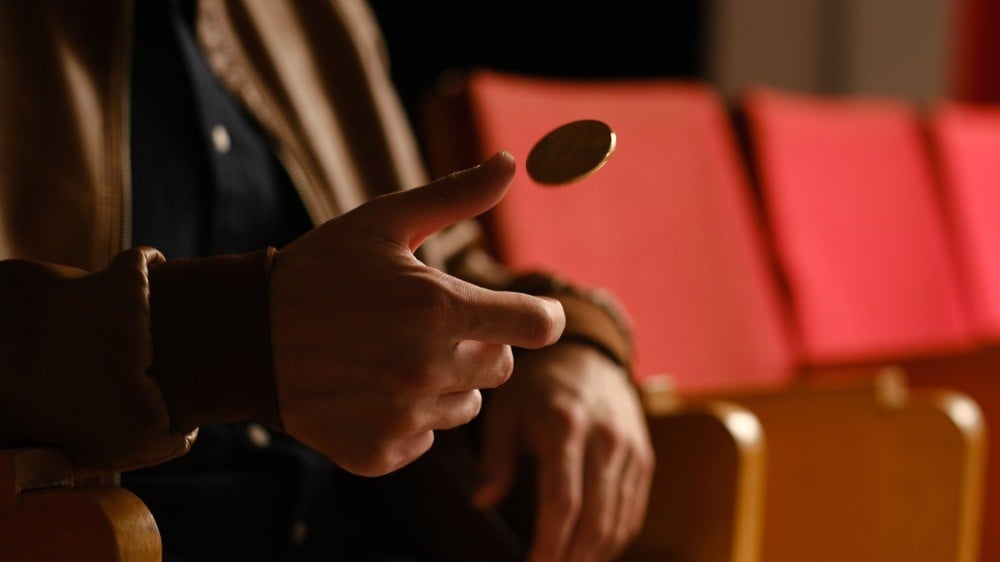
Outsourcing your choices to a tossed token or the gospel according to a duplicitous Seinfeld character. A bold strategy, Cotton — let’s see how it plays out.
There should be a warning posted at the entrance to adulthood. Not something dramatic — just a practical sign at eye level where you can't miss it: You will now be asked to make thousands of decisions every day. Most will be trivial. A few will matter. You will not be told which is which until it's too late to do much about it.
That's the real problem. Not that life is hard — life has always been hard. The problem is that modern life keeps handing us tiny decisions dressed up like moral exams. What to eat. Whether to exercise. Whether to answer that email now or later, when a better, more emotionally regulated version of yourself will presumably materialize and handle it. Whether to respond to a text with a full sentence, a thumbs-up, or silence — which is apparently also a message now, so congratulations, you've communicated nothing and said everything. Whether to buy the whitening toothpaste, the enamel repair, the sensitivity formula, or the one that appears to have been developed by people with graduate degrees in mint.
By 9 a.m., the human brain has already been dragged through a flea market of meaningless options. And that's before anything important happens.
This is not just a feeling. In 2011, researchers analyzed over 1,100 parole rulings made by Israeli judges over roughly ten months. At the start of each session, prisoners were granted parole in about 65% of cases. By the end, just before a food break, that number fell close to zero — then jumped back to 65% right after the break and declined again. After accounting for basic case details, the timing of a case in the daily sequence emerged as one of the strongest predictors of whether someone went home or stayed in prison. Judges who had devoted their careers to careful deliberation appeared to lean more heavily on the default option — denial — as decisions accumulated and mental energy wore down.
Researchers call this decision fatigue. Choosing costs something. The cost accumulates. And when the account runs low, the brain stops deciding and starts defaulting. The default in that parole study was denial. In your life the defaults are quieter — the skipped workout, the reactive email, the safe choice, the conversation you meant to have and didn't. They add up the same way.
Worth noting: the parole study has its critics. Some researchers argue that case scheduling wasn't as random as the authors assumed. The debate continues. But whether the culprit is hunger, fatigue, or scheduling, one thing holds: non-substantive factors influence high-stakes decisions. That's not a small thing to sit with.
So naturally, because humans are humans, we go looking for an exit. A hack. A rule. Anything that gets us out from under the weight of being fully responsible for our own choices. And this is where two unlikely ideas walk in.
The first is the coin flip. The second is what the internet calls the Opposite George method — named after a 1994 Seinfeld episode that may be the most philosophically underrated thirty minutes in American television history, which is a sentence I did not expect to write today but here we are. Both approaches are funny. Both are, in their own way, coherent. And both reveal something unflattering about what making decisions actually feels like right now.
Method One
The Coin Flip: Humility, or Just Hiding?
There is something wonderfully offensive about flipping a coin to make a decision. It feels childish. Irresponsible. Like consulting a squirrel — except the squirrel at least has skin in the game. It suggests that the elaborate interior drama most people perform before ordering lunch could be replaced by a nickel, and the nickel would do about as well.
But here is what the coin actually has going for it: it has no agenda. It does not care about your personal growth. It does not ask for your email address. It does not sell a course. It does not use the word unlock. It just lands on the table and says, there — now stop staring at the menu.
In a world where people outsource decisions to algorithms, personality tests, financial influencers, GPS, smartwatches, and strangers in online forums with usernames like WealthVibes47, the coin may be the most honest outsourcing left. No branding. No dashboard. No monthly fee. Just randomness with ridges.
The coin is genuinely useful for low-stakes decisions — what to eat, which route to take, whether to clean the garage today or let it sit one more day in quiet disgrace. Decisions that do not deserve the three-act structure most people give them. It ends what I think of as the Lamp Inspection Problem: the mental equivalent of walking into a room, forgetting why you came in, and then pretending you meant to look at the lamp. The coin ends the inspection. It moves things along, which is more than most internal committees manage before noon.
It also has a trick most people miss. Flip a coin on something you genuinely can't decide, then pay attention to how you feel when it lands. In lab and field studies of choice, people often report an immediate emotional reaction — tension, relief, clarity — the moment uncertainty collapses into a concrete result. Heads says go and you feel dread. Interesting. Tails says stay and you feel quietly relieved. Also interesting. The coin isn't really deciding for you. It's forcing reality to move first so you can finally see what you actually think about the result.
The coin doesn't decide for you. It's more like a very cheap therapist — it reflects something back, charges nothing, and says nothing unhelpful about your childhood.
That's the good version of the coin. Here's the honest version.
The coin is an expression of humility, and humility is genuinely valuable. But if you live by the coin too long, something quietly shifts. You stop practicing the art of weighing things. You get good at moving when pushed and less practiced at moving because you actually decided. The vocabulary of fate creeps in where discernment ought to be. It is not a long trip from "I let the coin decide" to "things just happen to me."
There is also a subtler problem. The coin is never as neutral as it looks. You decide when to flip it. You decide which options count as heads and which as tails — and that framing is itself a choice, often a revealing one. You decide which areas of your life are coin-eligible and which are too important for that. The device is random. The use of it is not. And when something goes badly, the temptation is almost irresistible: that's not a choice I made poorly — that's just what the coin said. Chance becomes a small metal shield against regret. That's not humility. That's a costume humility wears when it doesn't feel like being accountable.
Method Two
Opposite George: Self-Improvement, or Self-Contempt?
The Opposite George method is a different creature entirely. Where the coin says I don't know which option is better, George says something considerably ruder: whatever I want is probably the wrong thing to want.
In Season 5, Episode 22 of Seinfeld — May 19, 1994, a date that deserves its own minor federal observance — George Costanza sits in a diner and arrives at one of the most honest moments in American comedy. He looks at his life — the failed relationships, the stalled career, the general ambient humiliation of being George — and says:
"Every decision I've ever made, in my entire life, has been wrong. My life is the opposite of everything I want it to be. Every instinct I have, in every aspect of life, be it something to wear, something to eat — it's all been wrong."— George Costanza, Seinfeld, "The Opposite," May 19, 1994
Jerry's response is the pivot: If every instinct you have is wrong, then the opposite would have to be right.
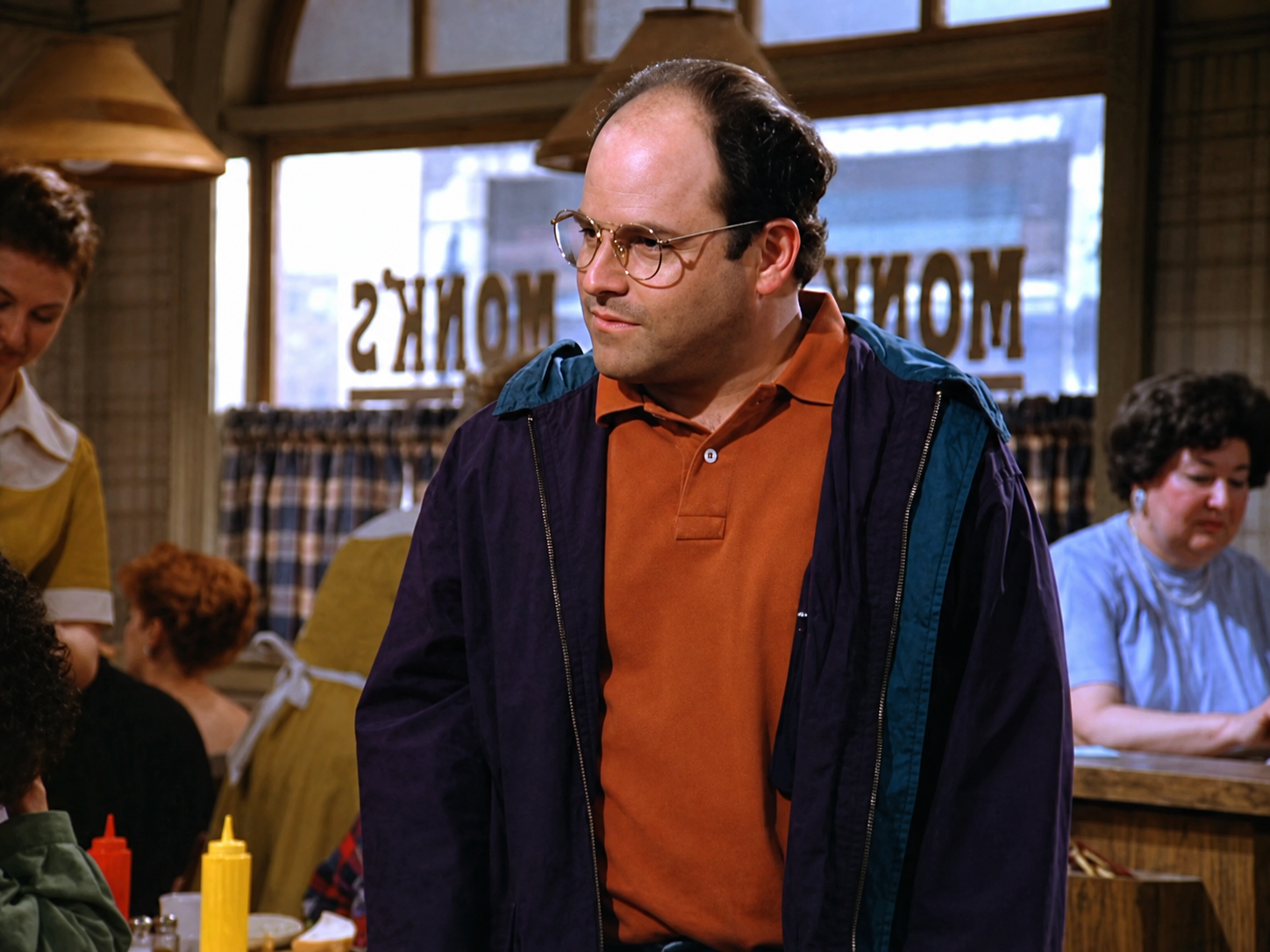
George orders chicken salad instead of his usual tuna on toast. He walks across the diner and tells a woman he's unemployed and lives with his parents — and she's charmed. He goes to a Yankees job interview and tells George Steinbrenner, calmly and directly, exactly what is wrong with the organization. He gets hired. For one episode, through sheer systematic inversion of his own judgment, George's life opens up.
The episode has lived rent-free in the culture for thirty years because it pokes at something people suspect about themselves but would rather not examine too closely: what if it's not the circumstances? What if the problem is the person doing the deciding?
Most people like to believe their instincts are ancient wisdom — signals from a quiet, experienced part of themselves that knows things the conscious mind doesn't. But when psychologists follow people through their actual days, a different picture shows up. In diary and experience-sampling studies, a large share of daily behavior is initiated and carried out automatically, with minimal conscious oversight. Once a pattern is established, the brain tends to treat it as resolved and just keeps running it. Most of what you do in a given day, you are not actually deciding. You decided once, long ago, and the brain filed it under resolved. The program just keeps running, unbothered, increasingly convinced it owns the place.
The instinct that says skip the workout has been making that call on the same days for three years without once being wrong enough to lose its job. The instinct to delay the hard email has a perfect record of kicking it further down the road. The instinct that says stay quiet in the meeting, say yes to the request, take the familiar route — these aren't fresh judgments. They're old decisions with good PR. They've been around so long they act like they own the place: sitting at the head of the table, clearing their throat, saying "we've always done it this way." And everyone nods, because the habit has tenure.
That's where Opposite George is genuinely useful. It doesn't ask you to be someone else. It asks whether the person you're being right now is actually chosen, or just familiar. For someone chronically overcommitted who forces themselves to say no for a month — and discovers the world does not, in fact, collapse — that's real information. For someone conflict-averse who commits to one honest conversation a day and feels their nervous system slowly recalibrate — that's also real.
Finance is where this plays out most visibly and most painfully. Investors say things like "I have a long-term disciplined strategy," then panic-sell when the market coughs twice before lunch. They buy high because the crowd is excited and excitement feels like safety. They sell low because fear grabs the wheel and calls it prudence. Behavioral economists have been documenting this for decades: people are not spreadsheets. They are mammals with brokerage accounts. And the Opposite George question — is this instinct wisdom, or just the loudest voice in the room? — is worth asking before every significant move.
But here is where the method gets dangerous, and this is the part that usually gets skipped.
If the coin expresses humility, Opposite George expresses something closer to contempt — for yourself. The coin says I can't tell which option is better. George says whatever I want is suspect. Taken seriously, the method insists that feeling comfortable with a decision is practically proof it's wrong. Ease becomes incriminating. Familiarity becomes a red flag. Live inside that long enough and you end up in a bind with no exit: either your instincts are wrong, or your attempts to override your instincts are the wrong instinct. There's no version where you're allowed to be at peace with your own choices. That is not self-awareness. That is self-estrangement dressed up as a growth mindset.
Not every instinct is fear. Some are experience. Some are conscience. Some are the quiet alarm that says we have seen this movie before and the ending required paperwork and an apology we're still paying interest on. If your instinct says don't send the emotional text at midnight, doing the opposite is not bravery. It's a group chat that needs a mediator by morning. If your instinct says don't pick a fight with the person who signs your checks, doing the opposite is not authenticity. It's unemployment with good anecdotes. Opposite George works when aimed at specific, recurring, demonstrably unhelpful patterns. It falls apart when it becomes a blanket policy against trusting yourself at all.
Two Different Tools. One Question You Still Have to Answer Yourself.
The coin and George are not the same idea and they're not interchangeable. They fail in opposite directions while responding to the same underlying pressure.
The coin says: I am tired of choosing — let randomness pretend to be wisdom. George says: I am tired of trusting myself — let self-betrayal pretend to be growth. Both offer the same quiet promise: you no longer have to stand alone in front of a decision, unmediated, without props or a script. You have a device. You have a rule. And in a culture that has developed an almost religious devotion to systems and frameworks, that sounds almost responsible.
Used carefully, as experiments, both can be clarifying. The coin is the right tool for decisions that don't deserve the drama — low stakes, genuinely close calls, the stuff that's been spinning in your head for twenty minutes when it merits about forty seconds. Let it land. Note how you feel. Move on. Don't build a philosophy around it. Opposite George belongs with patterns you can name specifically — not "all my instincts," but this one, in this recurring situation, where the evidence has been piling up that my default is broken. Not all instincts. The ones you can actually point to.
But when either one hardens into a permanent stance — I am someone who leaves things to chance, I am someone who never trusts their own gut — they stop being tools and become identities. And people who move into their coping mechanisms tend not to notice they did.
There are decisions where no coin is appropriate. There are moments where doing the opposite is just as wrong as doing the usual thing, only more surprising. There are forks in the road where the stakes are real, the trade-offs irreversible, other people are affected — and the only honest way forward is to sit with the complexity, feel the weight of it, and choose anyway. With no coin to blame. No sitcom character to quote. No system to hide behind.
"The measure of whether either method is working is simple: does it help you think more clearly, or does it give you somewhere to hide?"
Because after the coin lands, after the experiment, after the week of doing everything differently — there are still decisions waiting that require none of those props. Ones where the only thing left is to notice what you actually know, admit what you don't, listen to the whole tangle of instinct and fear and obligation and desire, and say something no system will ever say for you:
This one is on me.
George Costanza did the opposite and got the Yankees. Most people who try either method will get the wrong coffee, one surprisingly good conversation, a workout that almost didn't happen, an email answered in four minutes after four days of avoidance, and a slow, uncomfortable realization that a lot of what they call their personality is really just old habit showing up to work without being asked.
That is not a Yankees moment. But it's not nothing. And in a world where even experienced professionals drift toward harsher, more default decisions as the day wears on, simply noticing and nudging your own defaults is worth something.
Enjoyed the essay?
Subscribe to receive my weekly newsletter, new essays as they're published, and occasional updates from me.
Thank you for subscribing!
Have a great day!
References
Danziger, S., Levav, J., & Avnaim-Pesso, L. (2011). Extraneous factors in judicial decisions. Proceedings of the National Academy of Sciences, 108(17), 6889–6892. — The Israeli parole board study. Note: subsequent researchers have questioned whether case ordering was fully random; see Weinshall-Margel & Shapard (2011) for the methodological debate.
Weinshall-Margel, K., & Shapard, J. (2011). Overlooked factors in the analysis of parole decisions. Proceedings of the National Academy of Sciences, 108(42). — The rebuttal to Danziger et al. arguing that case scheduling was not random and may account for some of the observed pattern.
Jaffé, M. E., & Greifeneder, R. (2019). Catalyzing decisions: How a coin flip strengthens affective reactions. PLOS ONE, 14(8). — Research showing that a coin flip strengthens emotional reactions to options and helps surface genuine preferences people hadn't consciously acknowledged.
Rebar, A. L., Gardner, B., et al. (2025). Habit prevalence in daily life: An experience-sampling study. Psychology & Health. — Tracked 105 adults via smartphone prompts six times daily for one week; found the large majority of daily behaviors were automatically initiated and executed rather than consciously chosen.
Kahneman, D., & Tversky, A. (1979). Prospect theory: An analysis of decision under risk. Econometrica, 47(2), 263–291. — The foundational behavioral economics paper establishing loss aversion: losses feel roughly twice as painful as equivalent gains feel pleasurable.
Kuramoto, T., et al. (2024). Emotional instability and financial decisions: How neuroticism fuels panic selling. Risks, 12(12). — Survey data from 189,524 investors via Rakuten Securities and Hiroshima University; found roughly 9.5% fully or partially panic-sold during market downturns, with fear of loss as the primary driver.
Seinfeld, L., David, L., & Ackerman, A. (Writers/Director). (1994, May 19). The Opposite [Television series episode]. In Seinfeld. NBC. — Season 5, Episode 22. The one where George gets the Yankees job. You already know.