What a British Vet Show Taught Me About the Life I Left Behind
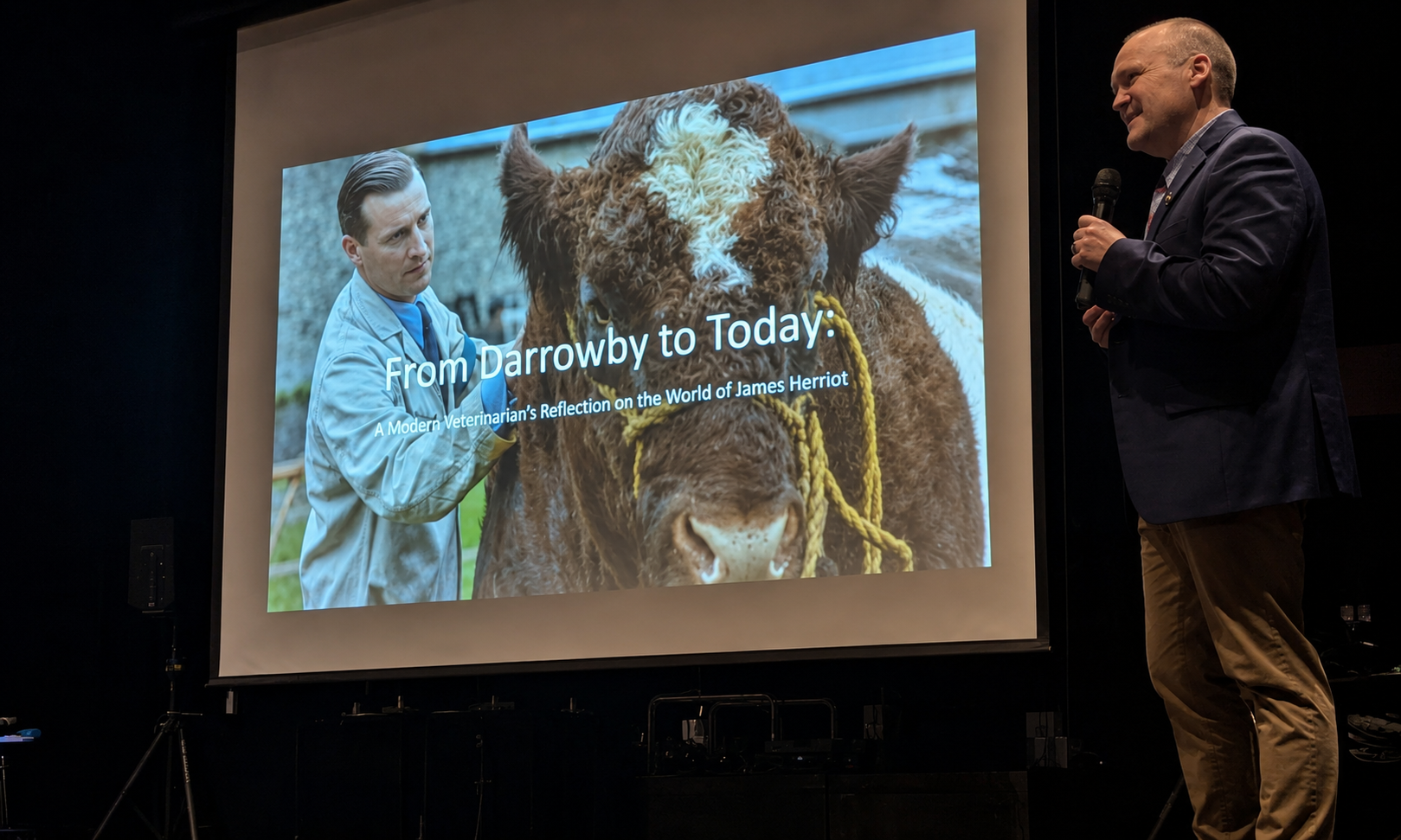
I never meant to watch All Creatures Great and Small.
Last fall, Iowa PBS reached out to the College of Veterinary Medicine at Iowa State looking for someone to speak after the Season 6 premiere at their headquarters in Des Moines. They wanted a veterinarian to reflect on James Herriot’s world and connect it to modern practice. I volunteered immediately, not because I had been watching the show, but because James Herriot’s books were part of the reason I became a veterinarian in the first place.
Then it occurred to me that I should probably watch it before standing in front of a theater full of people and talking about it. So I did what any reasonable person preparing for a speaking engagement would do: I binge-watched five seasons in a matter of weeks. Somewhere between Darrowby and Des Moines, something happened that I had not planned on. For the first time in nine years, I genuinely missed clinical practice.
The Homework That Got Personal
I expected charming British television, some nostalgia, and a tidy talk about how veterinary medicine has changed since the 1930s. What I got instead was a mirror.
Watching Herriot navigate the farms and families of the Yorkshire Dales, I kept seeing someone familiar: not the current version of me, the hospital administrator whose days run on budgets and staffing models, but the one who spent fifteen years in mixed animal practice across southern West Virginia, southern Ohio, and eastern Kentucky. The guy in the truck at dawn with a veterinary student riding shotgun. The one who knew clients by name, knew their families, knew which animals had names and which ones were just ear-tag numbers on a spreadsheet. The one who did surgery in barns under lighting that would make an OSHA inspector develop a facial twitch, then came home exhausted and covered in things better left undescribed, but genuinely satisfied.
I had not thought about that version of myself in years. Not in the deep way. Not in the way that makes you pause and remember what the work once took from you, and what it gave back. The show brought him back anyway, and once he showed up, he stayed awhile.
The Work I Loved
Those fifteen years in Appalachia were some of the best of my life, and not because the work was glamorous. It was not. It was muddy, inconvenient, and often heartbreaking. But the stakes were never abstract.
A dairy cow going down meant a family’s livelihood wobbling on the edge. A horse with colic meant showing up for someone’s partner, investment, athlete, and therapy animal all rolled into one. A dog hit by a car meant a chance to hand a family their best friend back. You either helped or you did not. There was very little room for anything in between.
I loved the surgery: the focus, the quiet when everyone in the room is holding their breath. I loved solving problems when the textbook answer was not available, or affordable, or three hours away at a referral hospital the client was never going to reach. I loved the students who rode along and learned that real medicine is not a clean diagnostic algorithm. It is mud, weather, worried owners, imperfect options, and doing the best you can with what is actually in front of you.
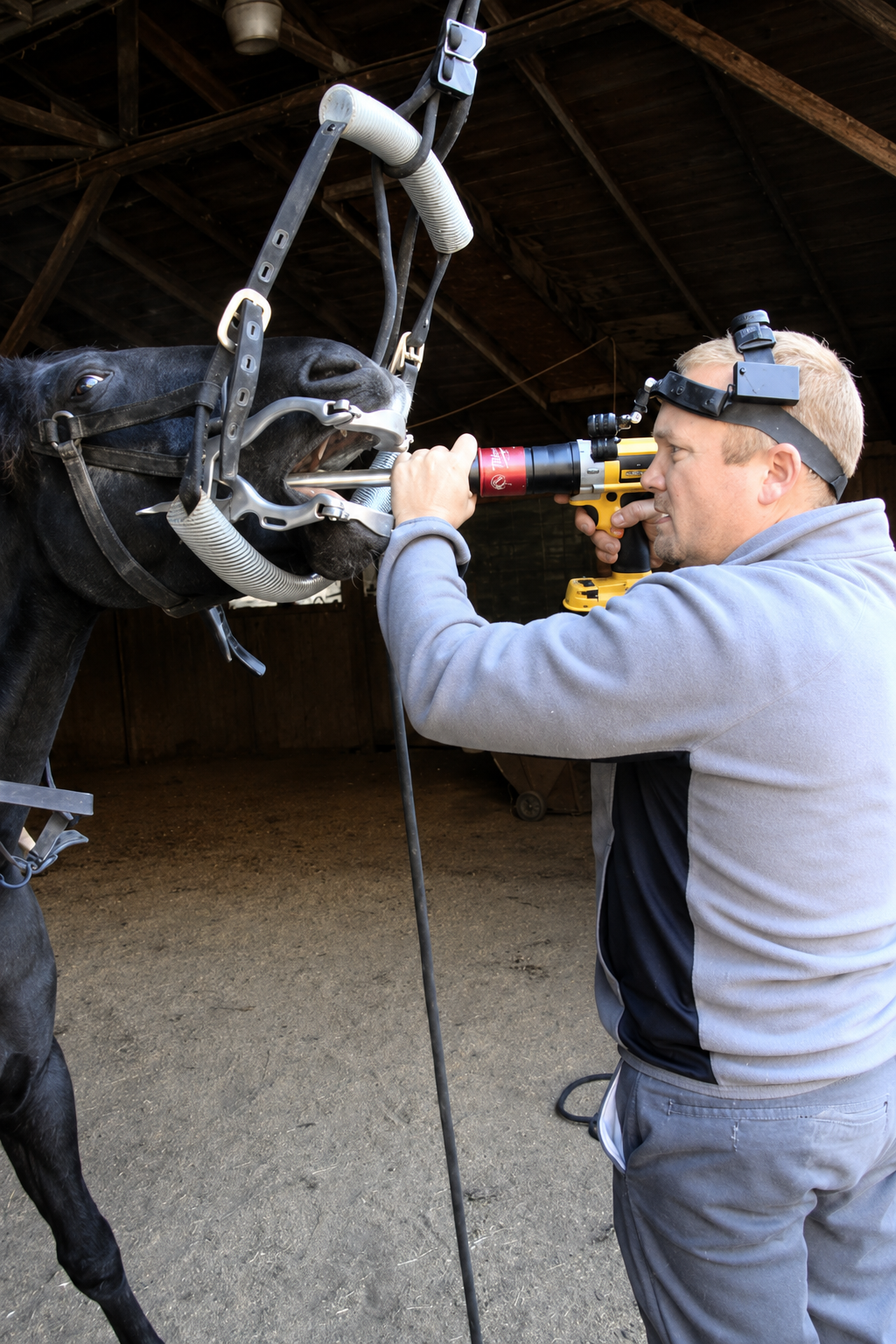
Mostly, I loved the people. Rural clients trust you in a way that feels almost sacred. They would call you out in the worst weather, apologize for the inconvenience, then hand you a jar of homemade jam on your way back to the truck. They would ask your opinion on things that had nothing to do with veterinary medicine because you were not just “the vet.” You were part of the community’s nervous system.
Even now, clients from those years still find me on Facebook to tell me what the work meant to them. Those messages land differently than any professional accolade I have collected since, because they are not about prestige. They are proof that it mattered, not just to me, but to them.
The Talk in Des Moines
Standing in front of a packed theater in Des Moines, I looked out at a room of PBS supporters who loved the show and had their own veterinarians and their own stories. My dean was the only other veterinarian in the building, which made the whole thing feel both flattering and mildly dangerous.
I talked about the parallels between Herriot’s world and modern practice: the trust between veterinarian and client, the way animals connect us to each other, and the strange privilege of being invited into someone’s life at the exact moment something they love is sick, hurt, or dying. Then I talked about Appalachia: the relationships, the long drives, and the feeling of being woven into people’s lives in ways that had nothing to do with an exam room.
Afterward, people lined up to share stories about their own veterinarians: the one who drove out in a blizzard, the one who grieved with them the day they said goodbye to a dog, the one who remembered a cat’s name five years after the last visit.
One woman took my hand and said, “Our vet retired last year. We haven’t found anyone like him since. Watching the show makes me miss him.”
I knew exactly what she meant. She was not just missing a professional. She was missing a relationship. Someone who had known her animals, understood her family, and gotten in through a door that only trust can open.
Why I’m Missing It Now
I left clinical practice nine years ago for academia, and it was the right call. I wanted a different kind of impact, and I have loved teaching, working with students, and helping build the veterinary technology profession into something stronger. I do not regret leaving.
But doing my “homework” for a speaking engagement cracked something open. I miss the real thing: being needed in that direct, unambiguous way, fixing something with my own hands and seeing the result right there in front of me instead of in an annual report, coming home exhausted from physical work instead of mentally fried from email.
And I miss the person I was when I did that work, which is not the same as thinking I made the wrong call by leaving it. Sometimes missing something simply means it was meaningful enough to leave fingerprints.
What Herriot Actually Understood
The show captures something true: real veterinary practice, the kind where you know your clients and they know you, is not just a job. It is a relationship, built visit by visit, sustained over years.
James Herriot, whose real name was Alf Wight, understood that from the start. He practiced in Thirsk for decades, writing stories that endure because they were never really just about animals. They were about trust. They were about people. They were about being called into the messy, emotional, ordinary sacredness of everyday life and doing your best when the outcome mattered.
That kind of long community tenure has become harder to find, especially in rural and mixed-animal practice. Veterinary medicine today carries real strain: long hours, educational debt, workforce shortages, burnout, and uneven access to care in many rural communities. USDA’s Veterinary Medicine Loan Repayment Program is built around designated shortage areas, offering loan repayment to veterinarians who commit to serving those communities, which says something important about how real the problem has become.
None of that makes leaving clinical work wrong. It does explain why a show about someone who stayed reached me the way it did.
The Person I Still Carry
Nine years removed from clinical practice, I am doing work that matters in a different register, and most days that feels exactly right. But every so often, when you binge five seasons of a show about a Yorkshire vet for a speaking gig, you remember what it felt like to be needed in the plainest sense of the word. You realize that version of yourself is still in there, quietly shaping every decision you make now.
Those fifteen years in Appalachia taught me what it means to earn someone’s trust and show up when it matters, even when it is inconvenient. They gave me some of the best memories I have. Lately, thanks to a British television show about a 1930s Yorkshire vet, I have been missing them more than I expected to admit out loud.
I never meant to watch All Creatures Great and Small. But I am glad I did, because somewhere in the middle of all that television homework, I found the veterinarian I used to be and remembered how proud I am to have been him.
Thanks for reading!
Subscribe to receive my weekly newsletter, alerts when new posts are available, and occasional updates from me.
Thank you for subscribing!
Have a great day!