Confessions of a Club Thrower
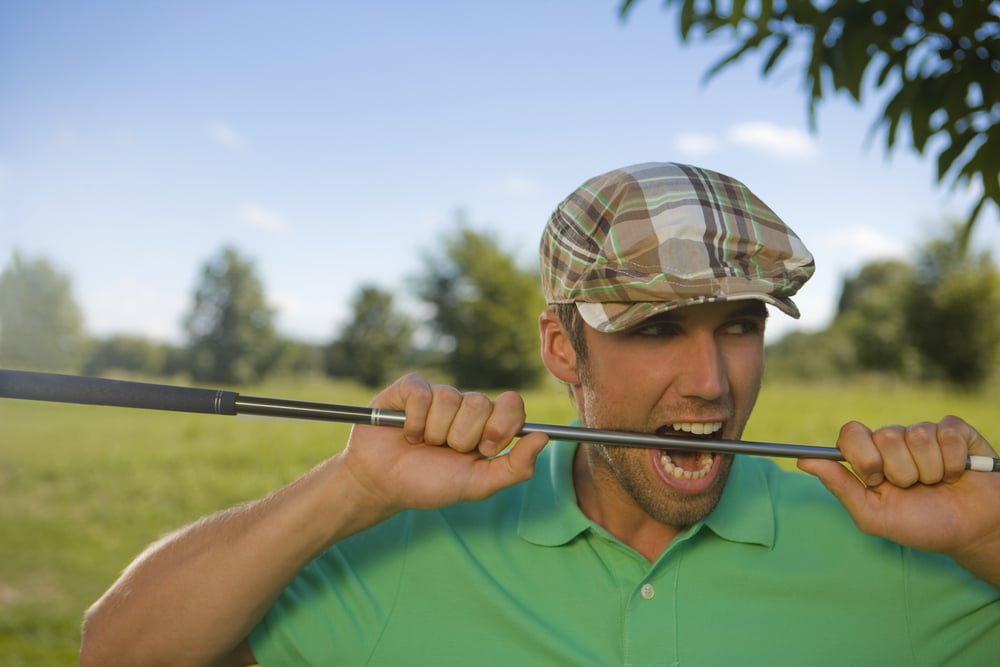
I threw my golf club.
Not casually. Not with a little theatrical toss into the grass. I mean, I threw it hard enough to tear a muscle in my shoulder and sideline myself for eight weeks. Doctor’s orders. No swinging. No range time. No “maybe just nine holes.” Just ice, rest, and the kind of self-reflection that arrives when you realize you have injured yourself in a fight against inanimate sporting equipment.
Sharing the story afterward was always amusing.
“What happened to your shoulder?”
“Well, I got into a disagreement with a golf club.”
The club, of course, was fine. Golf clubs are like that. Expensive, elegant, and somehow always innocent. My shoulder paid the price for what can only be described as a complete collapse in emotional maturity.
This was roughly twenty-five years ago, back when I was taking golf very, very seriously. Tournament golf. Competitive golf. The kind of golf where casual rounds did not exist unless there was money on the line. I was grinding every weekend like a man who had confused a recreational hobby with a second career. Every missed putt was a crisis. Every bad bounce felt personal. Every short putt that slid past the cup was apparently worth damaging my own shoulder over.
Looking back, it was ridiculous. At the time, it felt deeply justified, which is often how ridiculous decisions introduce themselves.
I started playing golf when I was fourteen, which means the game has had decades to work on me. I have played with executives, retirees, college kids, grandparents, people with enough money to buy the course, and people who scraped together the green fee all week. Golf attracts all types, but one thing remains consistent across all of them: golf reveals people.
Spend four hours on a course with someone, and you will learn more about their character than you might in months of normal conversation. You will learn how they respond when things stop going their way. You will learn whether they are patient, whether they are honest, whether they can laugh at themselves, and whether they believe the rules apply to everyone or only to other people.
Some golfers are eternal optimists. They hit a ball deep into the trees and immediately begin discussing the miraculous recovery shot they are about to attempt. Others are philosophers. After a missed putt, they stare silently at the ground as if contemplating life’s deeper questions, which, at that point, they probably are. Then there are the engineers, crouching behind every putt like architects studying blueprints, convinced that a sufficiently scientific approach will guarantee success.
It rarely does.
A golf course is a beautiful place to observe character either unraveling or holding together. It does this slowly, politely, and with just enough grass and sunshine to disguise what is actually happening.
The most interesting thing golf reveals is honesty. There are no referees on the fairway. You count your own strokes. You call your own penalties. If your ball moves when you address it, you add a stroke. No one else may have seen it. No one would ever know.
Except you.
Golf quietly asks a simple question: what do you do when no one is watching? That question applies well beyond the game.
I once played with a young kid who accidentally grounded his club and his ball moved just slightly. He looked up and said, “That’s a penalty stroke, right?” Nobody would have called him out. Nobody was waiting to correct him. But he knew. That moment stayed with me more than any birdie I have ever made.
Of course, nothing tests a golfer’s patience quite like the short putt. It looks easy. Three feet. Automatic. Sign here and move on. Your brain treats it like a formality.
Then you tap the ball toward the hole, and it slides right past, as if the cup itself has developed principles.
That was the kind of putt that ended my tournament career as a functional adult. It was not a dramatic fifty-footer. It was not some impossible downhill breaker on greens running faster than reason. It was a short, makeable putt that triggered a reaction worthy of a toddler armed with premium sporting goods.
There are cheaper ways to learn humility. Apparently, I was not interested in them.
Golf is one of the few hobbies where losing emotional control can directly threaten your credit score. Clubs are expensive. Balls disappear faster than patience. Shoes wear out. Memberships cost a small mortgage. And that is before you buy the lucky hat that, let us be honest, has yet to live up to the hype.
Tournament golf adds another layer. When there is money on the line, every bad shot carries a price tag. Every three-putt feels like a donation. Every ball in the water is a withdrawal from an account that did not have enough in it to begin with. Competitive golf has a way of turning an enjoyable outdoor hobby into something suspiciously close to work, only with worse odds and no paid time off.
Over time, my relationship with the game changed. Twenty-five years will do that. So will physical therapy.
I no longer play individual tournaments. I no longer play for money. That earlier version of me peaked somewhere around the shoulder incident, and from there my approach began to mellow. These days, the only competitive golf I usually play is a scramble. For the uninitiated, a scramble is what golf looks like when adults finally admit they just want to be outside with their friends. Everyone hits, the group picks the best shot, and you play from there. It is the golf equivalent of a group project where everyone takes the best answer and nobody has to show their work.
In short, it is golf for people who have made some peace with themselves.
I have made some peace with myself. Mostly.
The rounds I enjoy most now are the ones with no scorecard, no stakes, and no agenda beyond fresh air, conversation, and not needing emergency medical care before the turn. I like walking nine or eighteen holes. The exercise matters. So does keeping pace with the group behind you. But somewhere between the first tee and the last green, something shifts. The conversations find their own rhythm. The noise of the day gets left in the parking lot. Nobody is keeping score, and nobody is performing for anyone.
Those are not the rounds of a man trying to win something. Those are the rounds of a man trying to remember why he started playing in the first place.
Golf is also a great equalizer. A three-foot putt does not care about your job title. A bunker does not care about your net worth. Water hazards are unimpressed by your résumé. On the fairway, everybody is reduced to the same basic hope: maybe this next shot will be better.
You can also tell a lot about people by how they drive the cart. Some are cautious and deliberate, following every rule of the path. Others, usually a guy named Gary, treat it like they are auditioning for a low-budget action movie. In its own strange way, that is another lesson from the game. Some people stay carefully on the path. Some take shortcuts. A few end up in a sand trap wondering how it all went wrong.
One of the great gifts of golf is that you can play it for most of your life. The swing may shorten. The drives may lose distance. The walk feels a little longer than it used to. But the rhythm stays familiar.
Walk. Think. Hit the ball. Try again.
The older golfers I have played with often seem almost immune to the emotional chaos that ruins the rest of us. They have sliced balls into ponds, missed putts, lost matches, lost distance, and lost more golf balls than they could ever count. Somewhere along the way, they stopped pretending any of it was worth a full collapse. They are just happy to be out there.
That is not just a golf lesson. That is a life lesson wearing a collared shirt.
Golf is not for everyone. It is expensive, slow, and if you have ever been stuck behind a foursome treating every green like a city council meeting, it can challenge even the patience the game is supposed to teach. But even if you never set foot on a course, the lessons are still worth considering. We all have some version of golf in our lives. Some project, craft, relationship, goal, habit, or ambition that humbles us repeatedly and keeps pulling us back anyway.
The question is not whether you will have bad shots. You will. The question is what you do with the club when it happens.
I recommend not throwing it.
It took a torn muscle and eight weeks on the bench to ask something I should have asked much earlier: what is this actually for? For me, the answer has changed with age. Golf is no longer about winning, proving something, or walking off the course with a number I can brag about. It is about patience. Honesty. Humility. Friendship. Fresh air. Self-control. And the simple pleasure of doing something difficult without allowing it to ruin your afternoon.
I still get frustrated. I still mutter to myself. I still occasionally believe, for a few unstable seconds, that I am one bad hole away from retiring forever. But I no longer play tournaments. I no longer keep score most days. And I no longer let a golf club become a projectile.
Mostly.
Maybe that is the real lesson. Not perfection. Not mastery. Not some permanent state of calm where every missed putt becomes a beautiful educational moment. Maybe it is simply learning, a little at a time, to hold your temper, tell the truth, laugh at yourself, and understand that some of the most worthwhile things in life are also the most humbling.
Golf has taught me all of that.
Also, if you are going to lose control, try not to do it with something made of graphite and steel.
Thanks for reading!
Subscribe to receive my weekly newsletter, alerts when new posts are available, and occasional updates from me.
Thank you for subscribing!
Have a great day!